
The Triskelion: From Ancient Spirals to Secret Symbols of Desire
The triskelion, with its three spiraling arms, is one of humanity's oldest symbols, a timeless emblem that bridges the ancient and the modern, the cosmic and the intimate. Its origins stretch back to the Neolithic period, while its modern adaptation in the BDSM community carries a hidden legacy tied to secrecy, identity, and desire. Let's explore the history of this captivating symbol and its transformation into a discreet marker for a vibrant subculture.
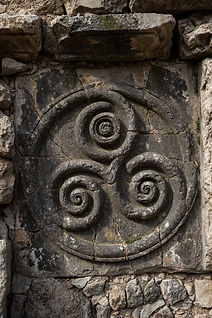
The Ancient Triskelion: A Neolithic Prayer in Stone
Around 3200 BCE, Neolithic farmers carved the first known triskelion's into the monumental stones of Newgrange, a passage tomb in Ireland older than Stonehenge or the Egyptian pyramids. These triple spirals, found across Europe and as far as Malta's ancient temples, likely symbolized the cyclical forces of nature: fertility, seasons, or the cosmic dance of creation. By the Bronze Age and into the Celtic era (circa 1200 BCE), the triskelion became a profound emblem of triplicity. For the Celts, it represented the three realms of earth, sea, and sky, or the goddess's phases: maiden, mother, crone. Its spiraling form captured life's dynamic energy, appearing on jewelry, pottery, and sacred carvings, a testament to interconnectedness and eternal motion.
The BDSM Triskelion: A Secret Marker Born in the 20th Century
Fast forward to the 20th century, where the triskelion found new life in a very different context: the BDSM community. In the 1990s, this ancient symbol was reimagined as a discreet emblem for those in the leather subcultures, its design adapted to reflect their values and identities. The BDSM triskelion, with three bold, symmetrical arms often enclosed in a circle, represents the three pillars of BDSM: Bondage and Discipline (B&D), Dominance and Submission (D/s), and Sadism and Masochism (S/M). Alternatively, it signifies the roles of Mind, Body and Soul encapsulating the balance of power, consent, and trust central tmthe growth of these dynamics.
The symbol's modern roots trace back to the 1954 novel The Story of O by Pauline Réage. This erotic tale described a triadic symbol worn by submissives as a mark of ownership, planting the seed for a real-world identifier. By the early 1990s, BDSM organizations like The Circle of Friends in San Francisco sought a subtle yet meaningful emblem for their community. The triskelion was a perfect choice: its ancient origins allowed it to blend seamlessly into mainstream settings as jewelry, tattoos, or engravings on personal items, while its three arms mirrored the triadic nature of BDSM relationships. In the dim glow of leather bars, this symbol became a secret handshake, a way for those seeking the lifestyle to recognize one another without drawing unwanted attention.
The addition of a circle around the triskelion was a deliberate touch, distinguishing it from Celtic or pagan versions and symbolizing unity, containment, and the safe boundaries of consensual play. This adaptation ensured the symbol could "hide in plain sight," evoking the mystique of ancient art while signaling membership in a community built on trust and exploration.
A Shared Legacy: Spirals of Meaning
The BDSM triskelion is no mere coincidence; it is a direct descendant of the ancient symbol, chosen for its historical neutrality and rich layers of meaning. Much like the pentagram in Wicca or the ankh in goth culture, the triskelion was repurposed to reflect the values of a modern subculture. Its adoption reflects a broader human tendency to revive ancient motifs for new expressions of identity, community, and ritual. However, not every triskelion carries BDSM connotations; the encircling ring and bold design are key to distinguishing it from Celtic or other cultural variants, ensuring respect for those traditions.
Eternal Spirals of Balance and Desire
Picture the ancient triskelion as a Neolithic farmer's prayer etched in stone: three spirals dancing from a shared heart, whispering of the sun's rebirth, the earth's endless turn, and the soul's journey through life's intertwined domains. It is a cosmic reminder that chaos and order, birth and decay, flow as one. Now, imagine the BDSM triskelion, born in the quiet fire of a 1990s leather bar. Here, three arms entwine not for harvest gods, but for the raw alchemy of surrender and command. The "realms" are vulnerability, control, and the electric space between; the "motion" is the pulse of negotiated ecstasy, cycling through trust's fragile orbit. Both symbols are legacies of human hunger: for meaning in multiplicity, for harmony in tension. The ancient triskelion maps the world's wild trinity, while its modern counterpart charts the body's.
What began as a 5,000-year-old echo of the stars now traces the contours of our most private whirlwinds, proving that a single symbol can span millennia, whispering secrets of balance and desire to those who know how to listen.


Comments